Sustainability has been described in many ways over the years. The textbook definition of sustainability is “enduring into the long term future” (Robertson et al. 2017, 3). This definition has people thinking of what the world would be like in the future. The future raises questions such as if there will be enough resources left for the future generation to use and how much more people can take from the earth before depleting its resources. These questions may not be answered until people can understand what sustainable development is and the three things that make it up: ecological sustainability, economic support, and social inclusion (Robertson et al. 2017, 4). A strong quote on page 4 of Sustainability Principles and Practice 2nd Edition was how the Brundtland report defined sustainabible development: “…development that meets the needs of the present without compromising the ability of future generations to meet their own needs (WCED 1987, 43)” (Robertson et al. 2017, 4). This struck out because it informs people of the importance of being sustainable by creating an image of how future generations will live with substantially less resources than what is available today. Sustainable development is more explained in the video below on What is Sustainable Development? The video is a great example of how social progress, economical development, and the environment are interlocked with each other. The United Nations is pushing for sustainability in order for a healthier earth, more future generations to develop, and a stronger economic stand for the participating countries. In order for this to be successful, sustainability has to grow in society and people must talk about it and learn different renewable resources that will regenerate faster than they may be used.
https://www.youtube.com/watch?v=7V8oFI4GYMY
“Earth is currently operating at 140 percent of its capacity (Ewing et al. 2010, 18) and on track to be operating at 200 percent by the 2030s (Gilding 2011, 52)” (Robertson et al. 2017, 5). This quote is shocking and shows how little people know or care to apply sustainability into their lives. Richard Heinberg stressed of how earth is reaching its capacity and that energy consumption is up 814% from 1850-2000 (figure 1)(Heinberg 2018).
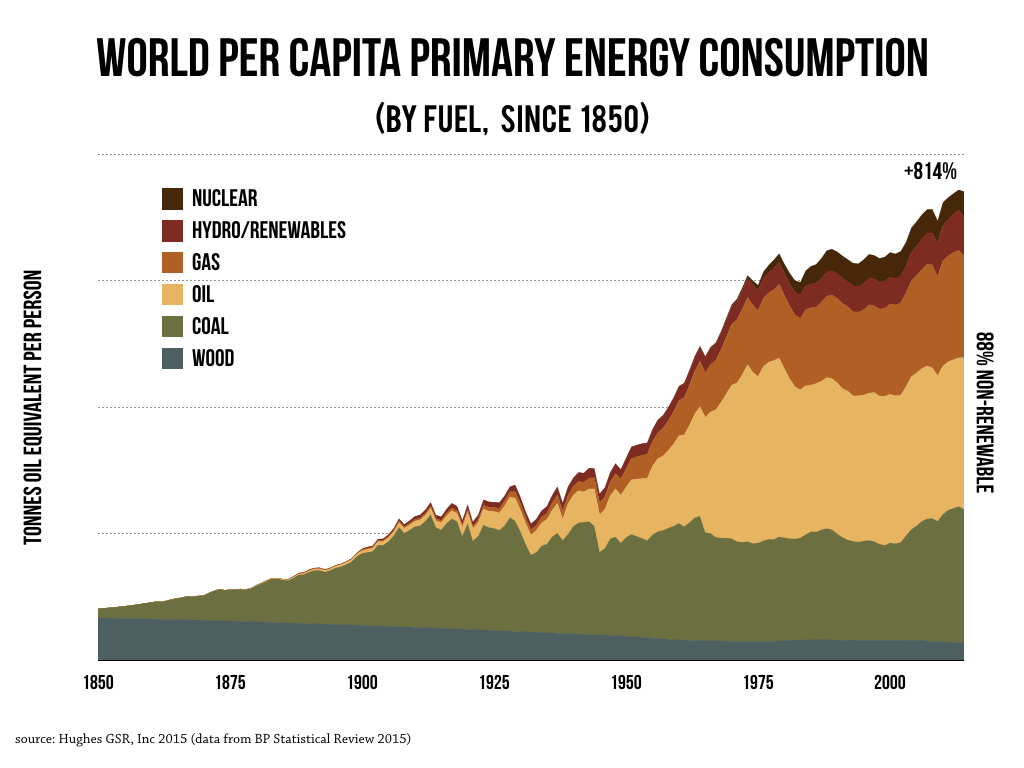
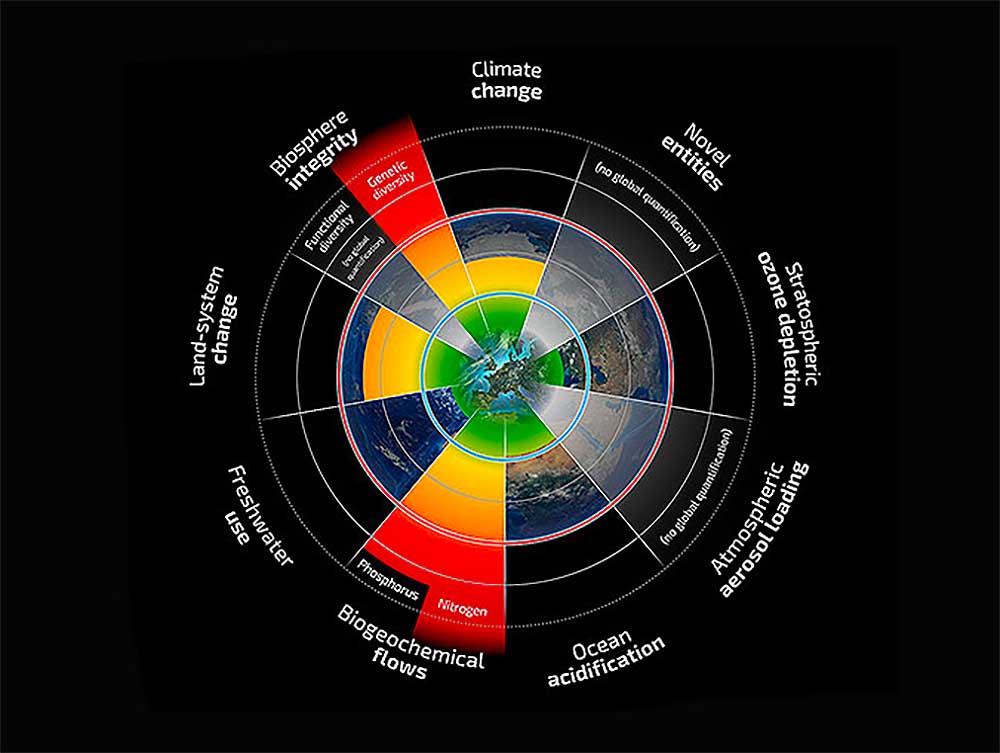
This rise in usage of renewable and nonrenewable resources can jeopardize the sustainability development of the future. There is a risk of lacking the resources in the future even while using renewable resources. This is because these resources can be used faster than they can regenerate. Without time for the resource to redevelop there will not be any to use further on. Research has shown that earth has a “safe operating space” in which society can continue to grow. This safe operating space is made up of nine boundaries: climate change, biodiversity loss, excess nitrogen and phosphorus production, stratospheric ozone depletion, ocean acidification, freshwater consumption, land-use change, air pollution, and chemical pollution (figure 2) (Robertson et al. 2017, 6: Heinberg 2018). Studies have been done on the health of all nine planetary boundaries and it was discovered that three out of the nine have already been exceeded. The three past the safe operating space are: nitrogen production, climate change, and biodiversity loss. Even with these exceeded boundaries, there is hope that these components will go back into the safe operating zone while entering a new geological epoch. Anthropocene, has been thought to be the new epoch and it will possibly provide stronger networks and communities that can take on a sustainable living approach in order for there to be a longer future for humans, the environment, and the planet.
Three Quotes: – Page 3: definition of sustainability – Page 4: “…development that meets the needs of the present without compromising the ability of future generations to meet their own needs (WCED 1987, 43)” – Page 5: “Earth is currently operating at 140 percent of its capacity (Ewing et al. 2010, 18) and on track to be operating at 200 percent by the 2030s (Gilding 2011, 52)”
Sources Heinberg, R. (2018, July 26). Ted Nordhaus Is Wrong: We Are Exceeding Earth’s Capacity for Humans. Retrieved May 16, 2019, from https://undark.org/article/ted-nordhaus-carrying-capacity-ecology/
Robertson, M. (2017). Sustainability Principles and Practice. Abingdon, Oxon: Routledge.

 Alexandria's Blog on Sustainability