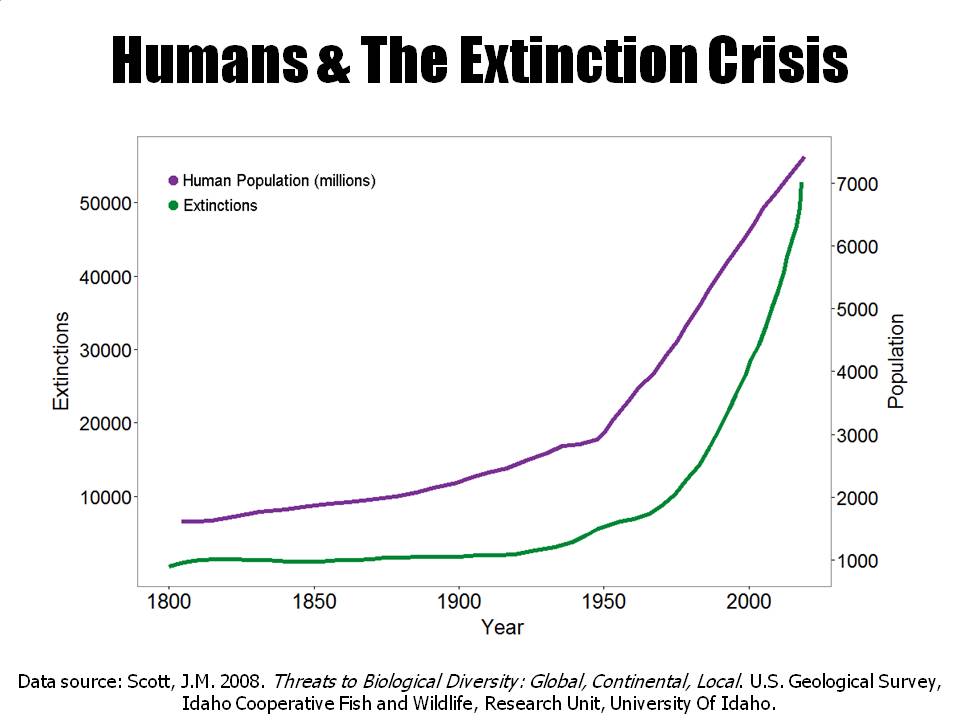
The ecosystem is diverse and contains many species in a variety of areas. It is easy for an ecosystem to be disturbed by many things, one of those things are invasive species. According to Robertson (2017) on page 117, “the most adaptable and destructive invasive species is Homo sapiens.” When looking at the vague definition of what an invasive species is I have to disagree with that statement. According to Zielinski (2011), humans are not an invasive species when comparing people to the definition. The part of the definition that fits the human race is how people are widespread and found all over the globe. People also have adverse effects on the habitat and environment. This is shown by figure 1 below with the correlation of humans to the extinction crisis. However, invasive species should be non-native and humans have been found on all continents over the globe (i.e. Native Americans). Invasive species also have to be introduced to new land by something else, but humans introduced themselves and decided where they wanted to wonder. To multiple definitions humans are not considered to be an invasive species, but they do pollute the earth and harm things around them.
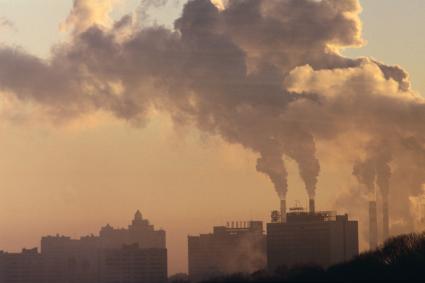
Air pollution is becoming stronger on earth effecting people, animals, and the environment. “Humans and other animals breathe several times a minute, taking in far greater volumes of air per day than they do food or water.” (Robertson, 2017). This means that our lungs are able to absorb air pollutants more than we take in water. Air pollution can harm respiratory systems, increase global warming effects, and cause smog that makes it hard to see and causes oxygen depletion. There are 6 criteria for pollutants and they are described in the video below as: particulates, carbon monoxide, sulfur and nitrogen oxides, lead, and ground-level ozone. All six pollutants can be made when fossil fuel is burned. Smog is a type of air pollutant that can be made by the burning of coal (sulfur oxides), photo-chemical reactions, and car exhaust (ground-level ozone and nitrogen oxide)(National Geographic, 2017). Smog is often made when factories are being used. It can also be emitted from radiation plants.
https://www.youtube.com/watch?v=e6rglsLy1Ys
Radioactive pollutants can damage the earth and have multiple causes (figure 2). Radioactive pollutants are able to cause smog to form in the air with the burning of uranium and other naturally occurring radioactive elements. “Pollution from radioactivity can come from naturally occurring sources including radon gas and background radiation, or it can be a byproduct of human activities, including medical diagnosis and treatment.” (Robertson, 2017). According to the Environmental Solution Centers, there are many different radiation pollution sources. Some human and natural ways this pollution reaches earth is from nuclear explosions, nuclear waste handling and disposal, and mining. Uranium is mined by crushing the uranium ore. The crushing of the ore allows for radioactive particles to reach the atmosphere and pollute the earth. Radioactive pollution can be managed by minimizing any accidents that can occur at a power-plant and by finding a safe way to mine materials such as uranium.
Causes of Radiation Pollution | Environmental Pollution Centers. (2017). Retrieved from https://www.environmentalpollutioncenters.org/radiation/causes/Human Population Growth and Extinction. (n.d.). Retrieved from https://www.biologicaldiversity.org/programs/population_and_sustainability/extinction/ Mayntz, M. (n.d.). Types of Pollution. Retrieved from https://greenliving.lovetoknow.com/environmental-issues/air-pollution-america National Geographic. (2017, October 16). Air Pollution 101 | National Geographic. Retrieved from https://www.youtube.com/watch?v=e6rglsLy1Ys Robertson, M. (2017). Sustainability Principles and Practice. Abingdon, Oxon: Routledge. Zielinski, S. (2011, January 31). Are Humans an Invasive Species? Retrieved from https://www.smithsonianmag.com/science-nature/are-humans-an-invasive-species-42999965/

 Alexandria's Blog on Sustainability