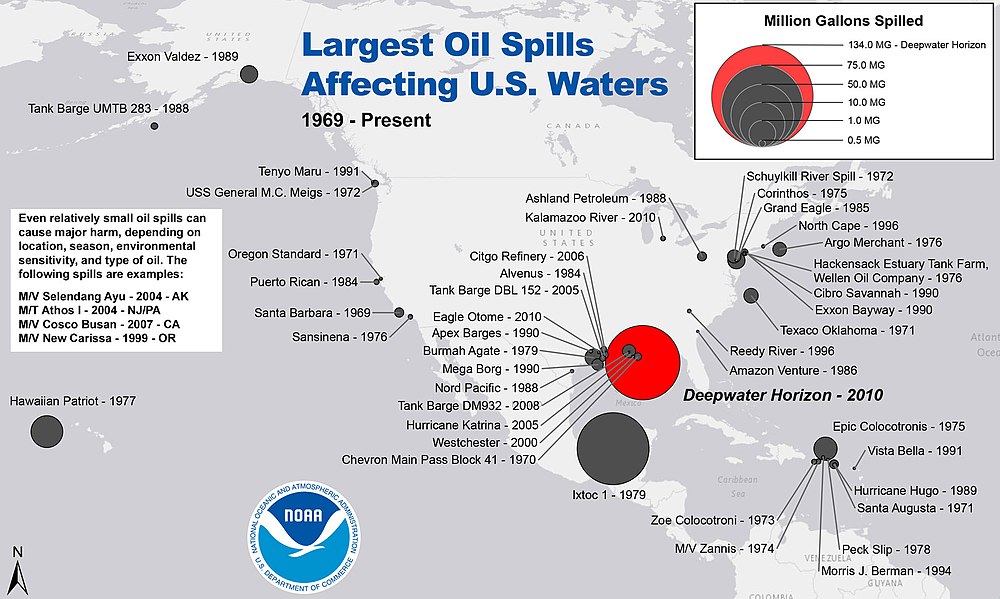
Energy is consumed in large amounts all over the world and needs to be replenished in order for people to keep their energy. With over 7 billion people on earth energy is frequently consumed and fossil fuels are used to create that energy. It is common knowledge that fossil fuels are not good for the environment and are running low. However, fossil fuels are still used for energy needs. One main fossil fuel that is drilled is petroleum. The drilling of petroleum allows for oil spills and leaks to occur in underground water pipelines. According to Robertson (2017), “a major issue associated with exploration is the release of petroleum into the natural world during an accidental spill”. These spills have been seen in the past many times, and the leaks that occur are just as hazardous over time (figure 1). In 2010 a massive oil spill occurred in the Gulf of Mexico killing thousands of animals that were only seen on the surface. It is still being investigated on how the oil effects the marine ecosystem as a whole. Pipeline accidents include the leaks that can occur after a while when the pipes corrode over time. Even if the pipelines are perfectly maintained there is an average amount of 1-2% of oil leaked per year.
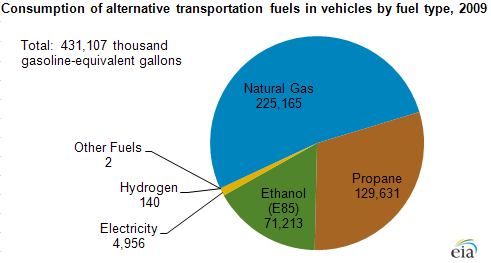
“Transportation, most of it cars and light trucks, is the world’s biggest user of petroleum and accounts for a significant share of global carbon dioxide emissions” (Robertson, 2017). In order to decrease the amount of petroleum drilled for energy and reduce the amount of green house gases other energy sources for cars are being investigated. There are 3 strategies that have been thought of to solve this issue and the one most heard of is the “…approach to find other energy sources as alternatives to fossil fuels. Alternatives include electricity, bio-fuels, hydrogen, and fuel cells” (Robertson, 2017) (figure 2) These alternative sources are an improvement, however they are still not perfect. One example is natural gas which is considered to be a transition fuel. This fuel releases 25% less carbon dioxide then ordinary gas combustion. Electrical vehicles also face challenges such as emissions released by electricity production, and energy storage. In order to produce the electricity coal, oil, and natural gases must be used. Since coal, oil, and natural gases will be needed the greenhouse gas concentration would remain the same (video 1). Energy storage is important because of the size of cars and the amount of batteries needed in order for a car to fully run off of it. Batteries have been modified over time in order to minimize this problem and make it easier for the car to hold the battery load.
Cited Sources: Office Response and Restoration. (2019, June 11). Largest Oil Spills Affecting U.S. Waters Since 1969. Retrieved from https://response.restoration.noaa.gov/oil-and-chemical-spills/oil-spills/largest-oil-spills-affecting-us-waters-1969.html
Robertson, M. (2017). Sustainability Principles and Practice. Abingdon, Oxon: Routledge. Seeker. (2016, April 14). Are Electric Cars Actually Better For The Environment? Retrieved from https://www.youtube.com/watch?v=qMJNvQ8X5Fw U.S. Energy Information Administration. (2011, August 11). U.S. Energy Information Administration – EIA – Independent Statistics and Analysis. Retrieved from https://www.eia.gov/todayinenergy/detail.php?id=2610

 Alexandria's Blog on Sustainability