Over the years there has been an increase in skyscrapers, offices, and houses being built. All of the buildings that are made harm the environment through the building process and with what is being emitted after the place is built. The way buildings are designed have been changed throughout the 21st century to create a more positive impact. A rating system has been made by the US Green Building Council called LEED (video 1). “Leadership in Energy and Environmental Design is a rating system for buildings developed by the USGBC. LEED certification provides third-party verification that a building’s design, construction, and operation will reduce green house gas emissions, use water and energy efficiently, and minimize environmental impact, promote social equity, and promote economic viability.” (Robertson 2017, pg 184). LEED is starting to be used as a standard for buildings by sustainability practitioners and contractors. Green buildings are collaborative projects that include a team of people ranging from investors, ecologists, and professionals in sustainability.
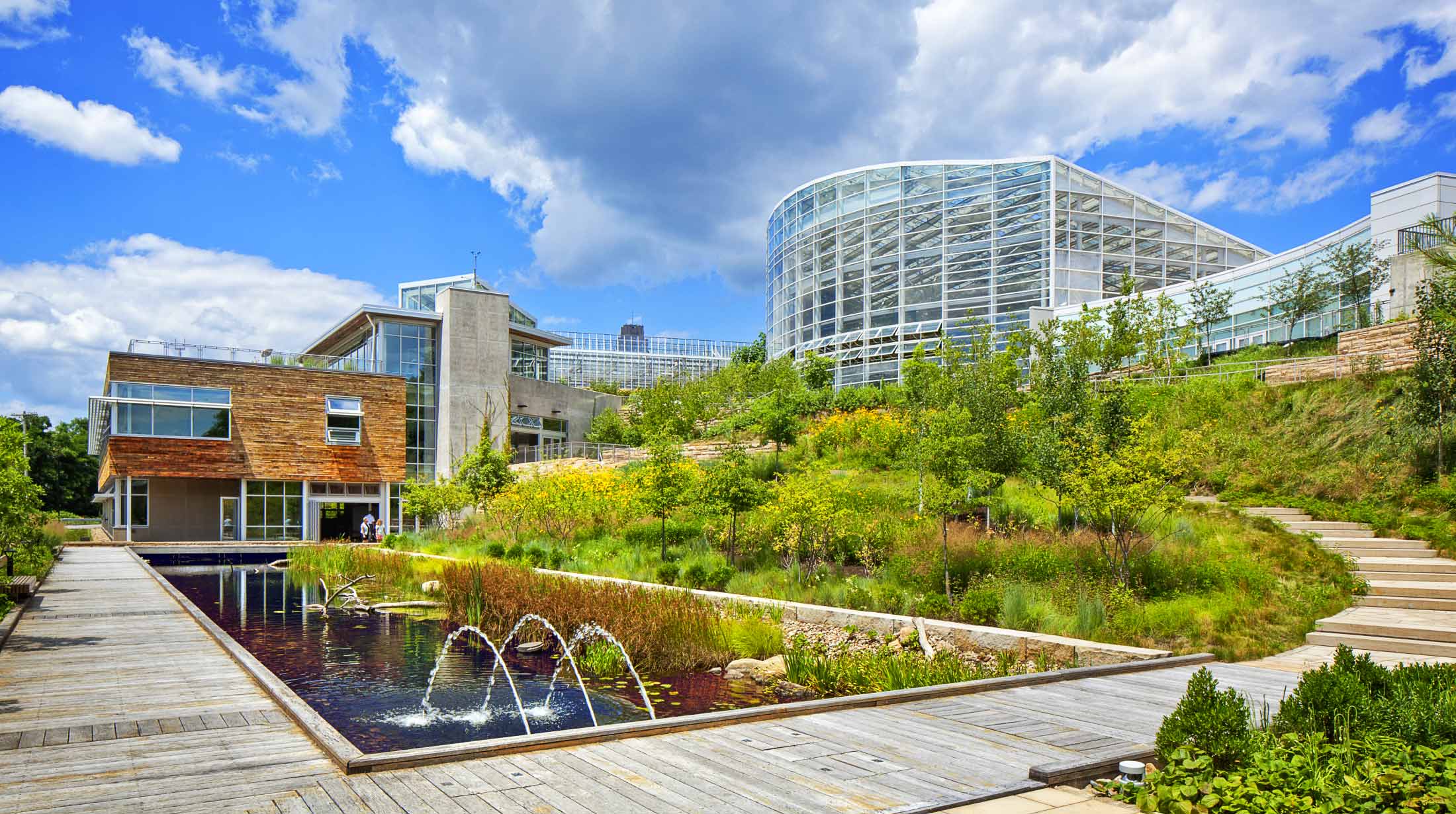
So what is a green building? A green building is a one that minimizes negative impacts on the environment and follows examples of natural and living things (Robertson 2017). Green buildings are different than normal ones because they take the whole process into account. This process includes where the material comes from, a more natural way to cool and heat the building with minimal emissions, and how the buildings interact with the environment. The need of heating and cooling methods, reflective roofs, and use of mosses on the sides of buildings are assessed depending on the environment that the structure is being made in. One structure that is one of the of the greenest buildings in the world is the Phipps Center for Sustainable Landscape (figure 1). The Phipps center reaches all the top marks of the LEED green building classifications (Phipps Conservatory and Botanical Gardens). However, While green building is better for the environment William McDonohough made a disclaimer that something better does not mean sustainable (Robertson 2017) . His statement reinforced the idea that a building may be used to give back to the natural world, but will never fully give back to the planet.
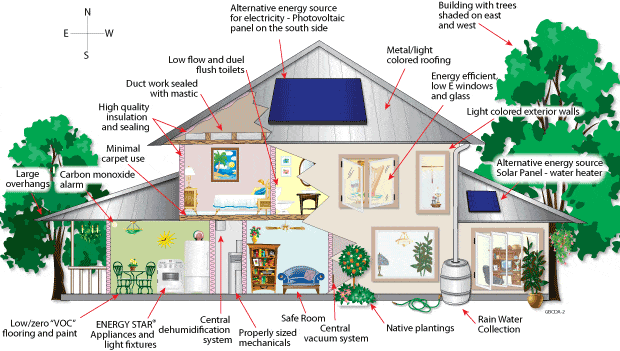
The process of designing a green building is more intensive then regular construction. According to Robertson (2017) on page 186, “these buildings are integrated systems that require a different, whole-building way of thinking”. To put it simply, a green building is interactive with other components of the house. The amount of time, money, and people needed to properly design a LEED building only adds to the complication. The system of development is known as integrated design in respects to the large team of people and environmental factors (figure 2). The process includes the environment in regards to shade, for cooling and to know the best placement for solar panels, the amount of solar radiation, and the temperature of the area. These buildings are showing improvement environmental impacts and are great for people, but can be costly to make and potentially turn away stakeholders or buyers. Over the years to come, hopefully there will be an increase in the amount of affordable green buildings so more people can make a difference.
Sources Cited: Phipps Conservatory and Botanical Gardens. (2019). Center for Sustainable Landscapes | Phipps Conservatory and Botanical Gardens | Pittsburgh PA. Retrieved from https://www.phipps.conservatory.org/green-innovation/at-phipps/center-for-sustainable-landscapes-greenest-building-museum-garden-in-the-world
Robertson, M. (2017). Sustainability Principles and Practice. Abingdon, Oxon: Routledge. USGBC (U.S. Green Building Council). (2015, October 16). What is green building? Retrieved from https://www.youtube.com/watch?v=MyIOtsx3wDs

 Alexandria's Blog on Sustainability