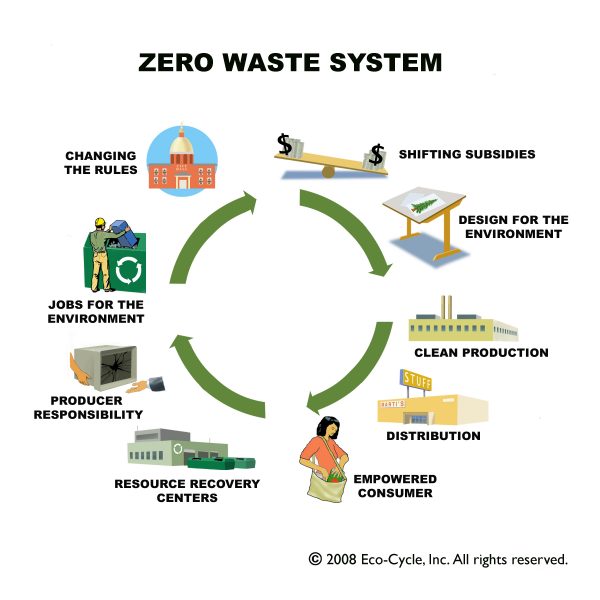
Each average person on earth produces around 4.5 pounds of trash a day that follows the “take-make-waste” way of life (Robertson 2017). This model is when everyday things that people use are bought and consumed, made again, and thrown away. When something is thrown away, the waste produced is typically what is used to produce the product that goes to waste. To face this problem people have been trying to make things “less bad”. One goal of the future is a zero waste system (figure 1). The zero waste model “looks at every material as a resource that can be used again.”(Robertson 2017). This means that instead of take-make-waste, the system becomes borrow-use-return. To achieve this design system the first thing that must be changed is packaging. This would be the first step since it would allow for packages to be reused, recycled, and durable. The next step would be to increase producers responsibility and change the laws and regulations (Robertson 2017; Green Building Elements 2012). In order to make recycling and reducing enticing to people, some regions provide incentives by changing trash fees to be based off of the volume of waste instead of monthly fees. By using less money on trash disposal the tax and fee money can be used more for infrastructure that supports reusing and recycling. An example of this kind of infrastructure is when clean waste to energy plants are made.
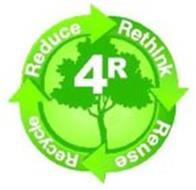
“Zero Waste is more than simply reuse and recycling, although those are important. The so-called fourth R, “rethinking,” is primary.” (figure 2) (Robertson 2017). By including rethinking into the 4 R’s, the route of the problem may be assessed. This fourth R stresses the importance of thinking about a product and its waste prevention before producing the product and dealing with the waste after it has been used. The waste can include food, packaging, technology, and construction debris. Some places have been rethinking in terms of waste disposal. One change is a waste stream that “consists of the waste material produced in a region and the paths it follows from its sources to final disposal.” (Robertson 2017). A waste stream gives the potential to remove waste with minimal harm to the environment. An example is a waste to energy facility. The facility can create clean air with filtration after the burning of goods to create energy. It also utilizes a waste stream to separate recycled goods. The stream allows for recycling to be easier for citizens and encourages them to do it. This allows for streams to be used in a positive way that can give back to the community. Using a waste stream for garbage and/or recycling is cleaner because it avoids the need of chemicals and biological waste disposal. Since the garbage burner filtrates the air it keeps the process clean and efficient.
Green Building Elements. (2012, October 18). Zero Waste Systems; A Cycle Following Nature’s Design – Green Building Elements 2019. Retrieved from https://greenbuildingelements.com/2012/10/18/zero-waste-systems/ Public Works Los Angeles County. (n.d.). Rethink. Retrieved from https://dpw.lacounty.gov/epd/rethinkla/rethink/rethink-todays-applications-of-4rs.aspx Robertson, M. (2017). Sustainability Principles and Practice. Abingdon, Oxon: Routledge.

 Alexandria's Blog on Sustainability